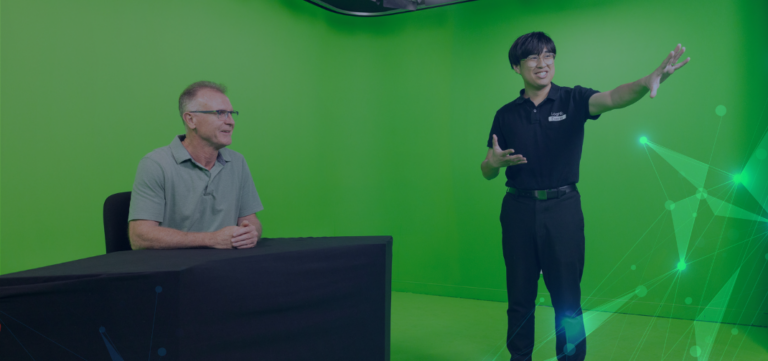
Virtual events for government departments in Australia have come a long way. From remote community consultations to studio productions, here is what we have learned working alongside the public sector.
Government departments face communication challenges that most organisations simply do not encounter. They need to reach remote and regional communities that are thousands of kilometres apart. They need to brief ministers, update stakeholders and consult with the public, often all within the same week. They need to do all of this in a way that is accessible, secure and accountable.
Virtual events for government departments in Australia have become essential tools for meeting those demands. Having worked with public sector organisations across a range of projects, from remote community webinars to studio productions and hybrid events, we have seen firsthand how the right format can make a significant difference to how effectively these communications land.
Here is what we have learned about webinars for government.
1. Remote communities deserve more than a phone call
One of the most meaningful uses of government webinars in Australia is community consultation and engagement with remote and regional audiences. For too long, distance has been a barrier to genuine participation. People in remote communities have often been consulted as an afterthought, with information shared late or in formats that were hard to access.
A well-run remote webinar changes that. With the right setup, government departments can run live consultation sessions that feel inclusive and respectful, where remote participants can ask questions, share concerns and feel genuinely heard. The barrier of geography does not disappear, but it becomes much easier to manage. And when sessions are recorded, communities have access to the full content at a time that suits them rather than being dependent on a summary written by someone else.
2. Internal communications need the same care as external ones
Government departments are often large, dispersed organisations with teams spread across multiple sites, regions and sometimes states. Keeping everyone informed, aligned and engaged is genuinely difficult, and a poorly run internal briefing can do as much damage to team culture as a failed external communication.
We have produced internal briefings, training sessions and leadership updates for public sector clients that needed to reach hundreds of staff simultaneously across different locations. The production values matter even for internal audiences. A professional setup signals that leadership takes the communication seriously, which in turn encourages staff to do the same.
“The format of a communication tells the audience how important it is. A professional production signals that what is being said deserves to be heard.”
3. When the message is sensitive, the environment matters
Some government communications require a level of discretion and control that a standard webinar platform simply cannot provide. Ministerial briefings, sensitive policy announcements, consultations involving vulnerable communities — these are situations where the environment in which the event is produced matters as much as the content itself.
A professional studio provides that controlled environment. There are no unexpected background noises, no technical failures from a home internet connection, no risk of sensitive material being seen by the wrong person. The session is produced in a secure, private space by a team that understands the importance of confidentiality. For government clients, that peace of mind is not a luxury. It is a requirement.
4. Accessibility is not optional
Government departments have obligations around accessibility that go beyond what most private sector organisations need to consider. Live captioning, Auslan interpretation, easy-read summaries, recordings made available after the event — these are not add-ons. They are part of what it means to communicate inclusively and meet community expectations.
Planning for accessibility from the start of an event rather than trying to bolt it on at the end makes a significant difference to the quality of the outcome. We work with government clients to make sure these requirements are built into the event design from day one so that nothing gets missed in the rush of production.
5. Budget constraints are real but so is the cost of getting it wrong
Public sector budgets are under constant scrutiny and event spend is no exception. We understand that government clients need to be able to justify every dollar and demonstrate value for money. That is a conversation we are very comfortable having.
What we would also say is that the cost of a poorly produced communication can far exceed the cost of doing it properly. A community consultation that fails to reach its audience, a ministerial briefing that goes wrong technically, an internal update that leaves staff more confused than informed — these have real consequences. Investing in quality production is not just about how things look. It is about ensuring the communication actually does what it is supposed to do.
6. Flexibility is everything
Government projects rarely run exactly to plan. Approvals take longer than expected. Stakeholder availability changes. A policy announcement shifts the timing of a consultation. We have worked with enough public sector clients to know that flexibility is not just a nice-to-have. It is essential.
Whether that means adjusting a schedule at short notice, accommodating a change in format, or scaling a session up or down based on updated requirements, we build our approach around the reality of how government projects actually work rather than how they are supposed to work on paper.
If you work in or with a government department and are looking for an events partner that understands the unique demands of the public sector, we would love to talk. From remote community webinars to studio productions and everything in between, the Loghic Events team has the experience to help.
FAQ
Your questions about virtual events and studio productions for government departments, answered.
✓
Can remote webinars really replace in-person community consultations?
Not always and we would never suggest they should. In-person engagement has qualities that a virtual format cannot fully replicate, particularly in community settings where trust and relationship-building are important. But remote webinars can complement in-person consultations significantly, reaching people who cannot travel, extending the reach of a session to a much wider audience, and providing a recorded resource that communities can return to. Used well, they make consultation more inclusive rather than less.
✓
How do you handle the accessibility requirements that government departments need to meet?
We plan for accessibility from the start of every project rather than treating it as an afterthought. That includes live captioning, Auslan interpretation where required, recordings made available after the event, and materials produced in accessible formats. If you have specific requirements we have not covered, we will work with you to find a solution that meets your obligations and serves your audience well.
✓
How do you manage confidentiality for sensitive government communications?
Our studio environment provides a controlled, private setting for sensitive productions. We work with clients to understand their confidentiality requirements before any project begins and put appropriate measures in place. We are experienced in working with sensitive content and understand the importance of discretion in a government context.
✓
Can you work within government procurement and compliance requirements?
Yes. We are experienced in working with government clients and understand that procurement, compliance and approval processes take time. We build that into our project planning and are happy to provide the documentation, quotes and information needed to support your internal approval processes.
✓
What is the difference between a remote webinar and a studio production for government communications?
A remote webinar is typically run with presenters joining from their own locations, which is cost-effective and flexible but depends on each presenter’s own setup and internet connection. A studio production brings presenters into a professional environment with controlled lighting, sound and technology, which delivers a higher production quality and removes the risk of technical issues from home or office setups. Many government clients use both formats depending on the nature of the communication. We can help you decide which is right for each situation.