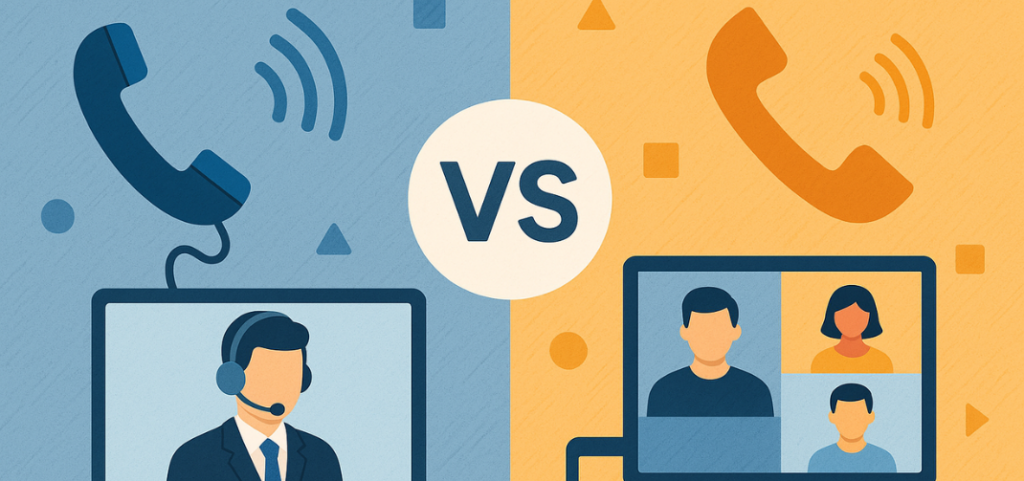
In today’s fast-paced business environment, teleconferencing plays a crucial role in connecting teams, clients, and stakeholders across different locations. But when planning a conference call, one key decision can impact its success: should you opt for an operator-assisted teleconference or a self-managed solution? Each option has its advantages, and the right choice depends on your business needs, event size, and level of control required.
What is Operator-Assisted Teleconferencing?
Operator-assisted teleconferencing provides a high-touch experience with a dedicated professional managing your call. This option is ideal for large-scale corporate meetings, investor calls, or high-profile discussions where smooth execution is critical.
Benefits:
✅
Professional Management: An experienced operator ensures seamless execution, handling technical aspects, introductions, and Q&A sessions.
✅
Enhanced Security: With controlled participant access and verification, sensitive discussions remain confidential.
✅
Reliable Call Quality: Operators monitor audio levels and troubleshoot issues in real time, minimising disruptions.
✅
Pre-Registration for Participants: A registration page can be set up to allow participants to pre-register, improving attendance tracking and security measures.
Best For:
• Results and investor calls
• High-stakes corporate announcements
• Large-scale company meetings
• Government or legal proceedings
What is Self-Managed Teleconferencing?
Self-managed teleconferencing offers flexibility and cost-effectiveness, allowing businesses to control their own meetings using conferencing software. Participants dial in through a provided link or phone number, with one person facilitating the session.
Benefits:
✅
Cost-Effective: No additional fees for operator support, making it budget-friendly.
✅
Immediate Access: Schedule and start calls without needing external assistance.
✅
Flexible and Scalable: Suitable for small to medium-sized teams and recurring internal meetings.
✅
Control Over Scheduling & Agenda: You can set up and run meetings at your convenience without needing to coordinate with an operator.
Best For:
• Routine team meetings
• Client discussions
• Training sessions
• Project updates and brainstorming calls
Key Differences Between Operator-Assisted vs. Self-Managed Teleconferencing
✅
Operator-Assisted: Best for large, high-profile, and corporate meetings with professional support.
✅
Self-Managed: Best for small, recurring, and informal business meetings.
✅
Security: Operator-assisted offers higher security and control.
✅
Budget: Self-managed is more cost-effective.
✅
Technical Support: Operator-assisted provides hands-on management, while self-managed relies on in-house troubleshooting.
How to Choose the Best Teleconferencing Solution for Your Business
When deciding between operator-assisted and self-managed teleconferencing, consider the following:
1. Audience Size & Complexity
• If your event involves hundreds of participants or needs structured management, operator-assisted is the better choice.
• For smaller, informal calls, a self-managed approach works well.
• Operator-assisted calls provide higher security for confidential discussions.
• Self-managed calls rely on host settings and access controls.
3. Budget Constraints
• If cost is a concern, self-managed conferencing is the more economical option.
• High-value events may justify the cost of an operator-assisted service.
4. Technical Support Needs
• If you anticipate technical difficulties or need hands-on assistance, an operator can manage issues in real-time.
• Tech-savvy teams comfortable with conferencing platforms may not need this support.
The Future of Teleconferencing: Trends to Watch
Industry-Specific Compliance & Security Standards: Certain industries, such as finance, healthcare, and legal, require more stringent compliance measures and encryption for confidential meetings.
Greater Emphasis on Reliability: Businesses are seeking teleconferencing solutions with improved uptime, redundancy, and failover mechanisms to ensure seamless communication.
Increased Demand for Customised Conferencing Solutions: Businesses are looking for teleconferencing services that cater to industry-specific needs, such as compliance for financial services or high-quality audio for legal proceedings.
Finding the Right Teleconference Solution
Both operator-assisted and self-managed teleconferencing offer unique benefits, and the right choice depends on your specific business requirements. If you need a polished, professionally managed event, an operator-assisted service ensures a seamless experience. However, if flexibility, affordability, and ease of use are your priorities, self-managed teleconferencing may be the way to go.
At Loghic Events, we specialize in delivering high-quality, reliable conferencing solutions tailored to your needs. Whether you require an expertly managed conference or a robust self-managed setup, we can help you find the perfect fit.
Get in touch to explore the best solution for your next event!
Need help with your teleconferencing setup? Contact Loghic Events today and let us simplify your communication!
FAQs
✔ What is the biggest advantage of operator-assisted teleconferencing?
Operator-assisted calls ensure seamless execution, better security, and professional moderation, making them ideal for high-profile meetings.
✔ Is self-managed teleconferencing secure?
While it provides basic security features like password protection, it lacks the high-level control and screening that operator-assisted calls offer.
✔ Which option is more cost-effective?
Self-managed conferencing is generally more budget-friendly, as there are no operator fees.
✔ Can I switch from self-managed to operator-assisted for a specific event?
Yes! Many businesses use self-managed conferencing for routine calls and opt for operator-assisted services for high-stakes events.